Not Sure Where To Start?
One question. Seven possible paths. Find the right articles for your financial situation in seconds.

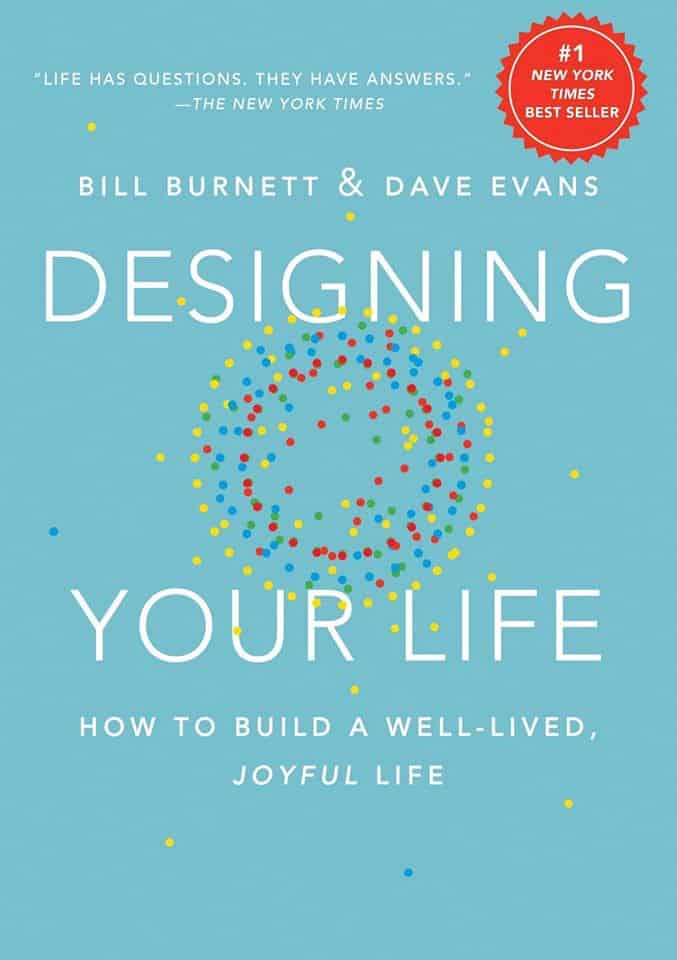
Recently, I enthusiastically recommended the insightful book Designing Your Life authored by Stanford professors Bill Burnett and Dave Evans. These experts skillfully adapt design thinking principles to guide individuals in discovering their ideal career paths and life directions as they mature.
Following my endorsements to a few close friends, two of them proposed that we collaboratively tackle the book’s practical exercises. Among them was Kim, my enduring partner, and Craig, a fellow alumnus from college. I decided it could be engaging to document and share our progress through these activities over the upcoming months.
To honor the intellectual property rights of the authors, I will avoid detailing the exercises precisely. Rather, I will offer a general summary and then elaborate on my personal responses. Where appropriate, I will also incorporate perspectives from my friends to enrich the discussion.
Now, with those preliminaries addressed, let’s embark on this journey. I’m excited to explore the outcomes as I initiate the life-design process outlined in the book.

The authors emphasize that the initial phase of life design requires beginning from your present circumstances. This resonates deeply with me. In fact, this mirrors the counsel I consistently provide to those seeking to revitalize their financial situations: commence from your current position.
For life design specifically, Burnett and Evans encourage a thorough self-evaluation. This process entails candidly assessing four key life domains—health, love, play, and work—by assigning percentage ratings to each and composing brief descriptions of their present conditions.
Below are my personal ratings for these essential areas of my life:
This inaugural exercise from Designing Your Life serves primarily as a diagnostic tool rather than a direct action plan. Much like calculating your net worth, it captures a momentary overview. However, after establishing this baseline—pinpointing your position on life’s broader map—the subsequent step is to chart your desired trajectory. This entails constructing a symbolic compass to guide your decisions.
In chapter two of Designing Your Life, participants are prompted to craft two concise, reflective essays: one termed the Workview and the other the Lifeview. These serve as foundational declarations of intent, closely resembling the personal mission statements I advocate for my readers.
Kim and I have yet to compare our outputs from this task, but earlier this week, Craig and I connected via video call to exchange our perspectives on work and life. I found the exchange profoundly rewarding, deepening my appreciation for him both personally and as a friend. This connection stemmed partly from the striking similarities in our responses, revealing our aligned core principles.
With Craig’s approval, I’ll present both his Workview and Lifeview alongside my own. I suspect readers will find these reflections compelling and thought-provoking.
Craig articulates his philosophy on work as follows:
Craig’s Workview
I willingly engage in work primarily for financial compensation if the pay feels equitable, but sustained happiness demands opportunities for experience, learning, and personal development. Pursuing work solely for monetary gain or social prestige taints efforts with trivial worries about fairness, rivalry, and avarice. Nevertheless, we operate within a capitalist framework that we can’t individually transcend, and it surpasses many alternatives in viability.
Assurance that my labor is just, sustains vitality, and avoids irreversible damage to ecological balances holds great importance for me. This pursuit of a “right livelihood” remains an ideal, potentially unattainable across certain timeframes when considering comprehensive environmental effects.
I derive the greatest value from visible, concrete work outcomes. Creating physical products proves especially gratifying, which explains my lifelong affinity for cultivation and growth. Nurturing abundance through food production offers perpetual fulfillment. Likewise, practical tools that facilitate such endeavors bring deep satisfaction.
Currently, the most profound work lies in rehabilitating natural ecosystems.
My own perspective on work is outlined here:
J.D.’s Workview
Work fulfills multiple functions in my existence. Naturally, it represents my chief avenue for income generation, yet it also allows me to allocate time meaningfully, fostering personal satisfaction while contributing positively to the wider community. It enables simultaneous enhancement of my life and others’. I’m grateful to have identified a path aligning these elements, even if my current earnings remain modest. I’ve discovered my ikigai.
I intend to keep these dual principles—empowering both myself and others through this platform—at the core of future career choices. Clarity on my passion and mission will guide me unwaveringly.
My goal is to evolve Get Rich Slowly into an indispensable, user-friendly hub for those aiming to master personal finance and life management. The site should embody simplicity, precision, and trustworthiness, always prioritizing the audience’s needs. Revenue generation is a secondary aim, one that may evolve gradually.
Craig and I were struck by the parallels in our work philosophies. We acknowledge work’s role in securing finances and concur that it should offer personal enrichment. Beyond that, we aspire for our efforts to extend meaningful impact, benefiting society broadly.
Craig referenced the Buddhist principle of “right livelihood,” while I drew on the Japanese notion of ikigai. These concepts evoked recollections of “personal dharma” from Stephen Cope’s The Great Work of Your Life, further reinforcing our shared ethos.
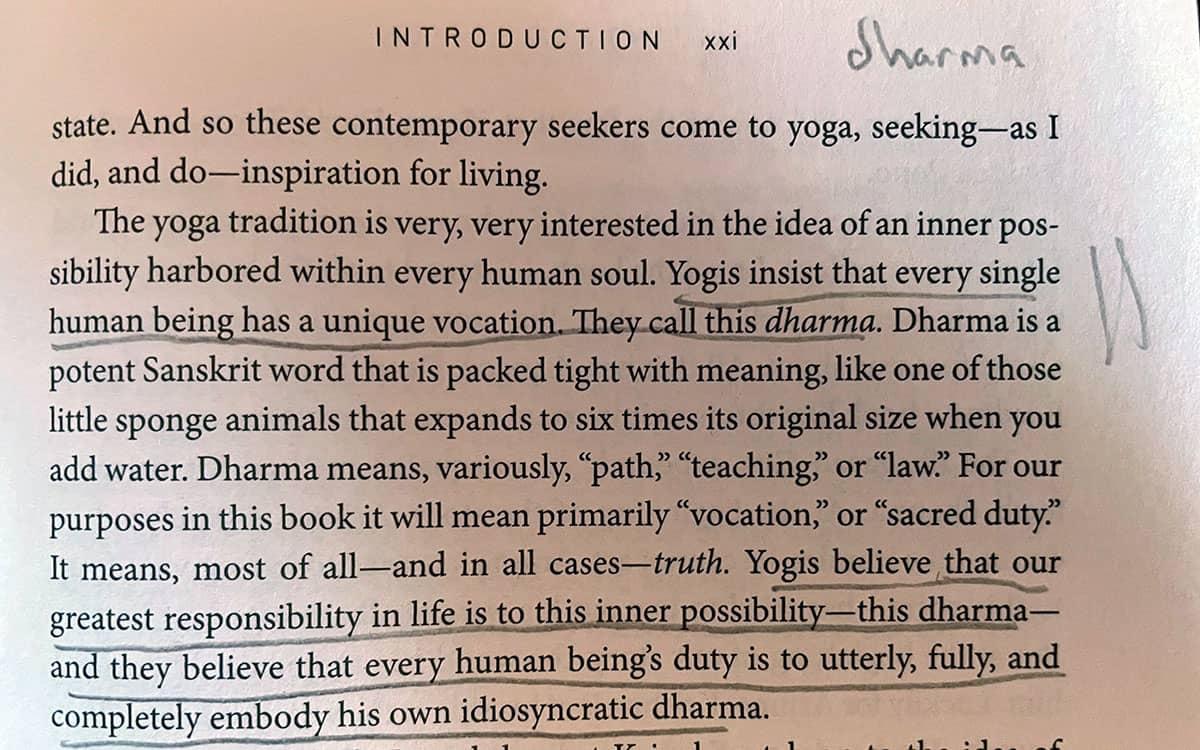
Upon reflection days later, I’d assert that Craig and I both seek vocations that cultivate abundance, yielding mutual benefits for ourselves and the world.
Shifting focus, here are our contemplations on life’s essence and objectives. Observe the extensive common ground—it’s almost uncanny, especially since we prepared independently.
Craig’s Lifeview
Primarily, avoid harm and occasionally contribute positively forms the bedrock of ethical living. My vibrant internal world yields rich rewards but risks self-absorption if unchecked. Disseminating wisdom and perspectives proves fulfilling, yet extending solace to others—through any means—elevates this further.
No divine entity exists, yet humanity’s quest for significance birthed gods, rendering select religious customs and ceremonies poignant. The humbling reality of Earth as a mere speck in cosmic immensity, with our existences as fleeting instants in eternity, paradoxically consoles.
Nature will ultimately reclaim our forms for sustenance, and embracing this cycle comforts. Meanwhile, prudent stewardship unlocks nature’s unimaginable bounty.
Ultimately, humor alone aptly counters life’s unpredictabilities. Communal laughter best vanquishes dread and suffering. “For what do we live, but to make sport for our neighbors, and laugh at them in our turn?” – Austen, Pride and Prejudice
My Lifeview reads thus:
J.D.’s Lifeview
Life lacks intrinsic purpose, a realization that could foster nihilism, indulgence, or isolation. I opt instead to embrace it as a canvas for self-authored meaning and purpose.
Morality transcends affiliations with deities, nations, or ideologies; it hinges solely on interpersonal conduct—and secondarily, treatment of all sentient beings.
True ethics manifests in interactions amid power disparities (e.g., with service workers, the unhoused, offspring, staff, or animals) and crucially, with ideological adversaries (like believers versus nonbelievers or partisan divides).
I cherish inquisitiveness, wisdom, compassion, reciprocal assistance, and communal ties—especially locally. Profound relationships spur growth. Much global discord arises from shunning dialogue with dissenters; I strive to bridge diverse backgrounds.
Maximum impact stems from inward-to-outward action: rational self-prioritization (sans harming others), then bolstering my partner, kin, and friends, extending ultimately to global betterment.
My aspiration: Depart this world improved from my arrival.
In debriefing our Lifeviews, Craig and I delved into social capital—a concept he introduced me to two decades prior via Robert Putnam’s Bowling Alone. We lament its evident decline in America, possibly exacerbated by digital isolation. Both desire our lives and labors to nurture this vital resource.

What accounts for Craig’s and my congruent outlooks? Perhaps our concurrent time at Willamette University played a role. Notably, Angela Rozmyn from Tread Lightly, Retire Early shares analogous views; she too is a Willamette graduate.
The university’s motto, non nobis solum nati sumus, meaning “not unto ourselves alone are we born,” evidently permeates our work and life philosophies—as it does Angela’s.
Burnett and Evans posit that Workviews and Lifeviews function as compasses, offering orientation amid uncertainty or crossroads.
I deem this exercise exceptionally valuable and plan to integrate it into my purpose-finding workshops, addressing prior shortcomings. The book’s methods provide robust enhancements.
Looking ahead, chapters three and four await. Over the next weeks, Craig and I will maintain “Good Time Journals,” tracking daily engagements and rating our levels of immersion and vitality. Mind mapping will then reveal patterns and insights.
Anticipation builds for these discoveries!