Not Sure Where To Start?
One question. Seven possible paths. Find the right articles for your financial situation in seconds.


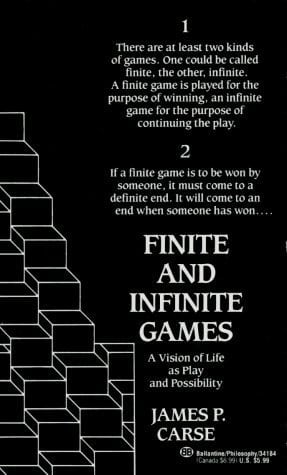
The expression ‘the game of life’ echoes everywhere in everyday conversations.
Countless books available on platforms like Amazon offer guidance on strategies for triumphing in this so-called ‘game of life.’ Even Milton Bradley’s iconic ‘The Game of Life,’ first introduced in 1860 and still popular today, holds the distinction of being America’s inaugural blockbuster board game.
Yet, in reality, the guidelines and benchmarks for victory in life’s supposed game remain nebulous and unspoken. Despite this ambiguity, society intuitively grasps them. Achieving the top spot demands:
What began as a mere figure of speech has evolved far beyond that. Numerous individuals, fixated on their social standing, professional achievements, or their offspring’s educational paths, have fully embraced this notion. They no longer see existence as an opportunity for joy but as a fierce contest demanding conquest.
This mindset represents a profound misfortune. Life is emphatically not a game.
A game entails direct rivalry against fellow participants. Participants chase objectives that hold no inherent worth. It truly makes no difference who scores more points by propelling a ball through a hoop or across a designated boundary, does it? Games operate under rigid, externally imposed regulations that players cannot influence or design, yet they must strictly obey them. Typically, only a single player or team emerges victorious, leaving the majority branded as ‘defeated.’
That said, I must clarify my enthusiasm for sports—whether participating or spectating. Games deliver immense enjoyment and serve as excellent pastimes.
Nevertheless, they provide a woefully inadequate blueprint for navigating life.
One fundamental reason is that life’s most vital elements cannot be contested. Although personal definitions of a rewarding existence vary, we universally recognize recurring traits: adherence to personal principles, nurturing deep connections, ample time for personal interests, and engaging professional pursuits.
These elements are inherently intangible and personal, resisting any competitive structure. There’s no feasible way to gauge and rank whether Tom Smith’s bonds are deeper than Jane Doe’s. Nor can we objectively assess whose career brings greater satisfaction. Quantifying fidelity to one’s moral compass defies measurement entirely.
Contrast this with the straightforward evaluation of concrete, measurable markers of achievement: whose vehicle is more luxurious, whose residence is grander, whose position carries greater prestige, or whose children attend superior academies.
Approaching life through a competitive lens inevitably elevates these quantifiable attributes. This shift directs energy toward superficial, measurable pursuits at the expense of profound significance. The drive to compete diminishes life’s true priorities, reducing them to mere trophies in a rivalry.
Moreover, the corrosive nature of competition undermines interpersonal connections.
Relationships, though multifaceted, fundamentally rely on authentic reciprocal care for true vitality and satisfaction. In essence, you genuinely desire success and joy for those closest to you—celebrating their promotions or their children’s admissions to top universities like Harvard. Such heartfelt support becomes exceedingly challenging if you perceive life as a contest and your loved ones as adversaries.
Embracing a game-like perspective fosters a desire for others’ shortcomings—or at minimum, their marginal underperformance relative to your own. This competitive outlook transforms cherished friends and family into strained, conflicted associations. You partially cheer for them while covertly striving to surpass them in life’s arena.
Clearly, this dynamic erodes the foundation of true intimacy and trust.
Adhering to society’s prescribed measures of success undermines your authentic priorities.
As a distinct individual, you possess unique talents, limitations, aspirations, and inclinations. A truly good life involves aligning your actions with your principles and making choices that optimize your well-being. This pursuit clashes irreconcilably with the game’s emphases: financial accumulation, lavish spending, scholastic accolades, or prowess in youthful athletics.
The instant you commit to the game, you relinquish self-determination, elevating external valuations above your own. You’re suddenly devoted to objectives you neither shaped nor endorsed, all in pursuit of ‘victory.’ Triumphs earned under such foreign rules invariably ring hollow, akin to a Pyrrhic victory that extracts a steeper toll than any gain.
Participation in life’s game guarantees potential loss, as it mirrors all zero-sum contests.
Perhaps you belong to the rare 0.01%—exceptionally intelligent, prosperous, charismatic, and handsome—who secures an ideal partner and raises adorable children destined for Ivy League glory. If so, congratulations are in order.
For the remaining 99.99%, realities include persistent hurdles, reversals, and domains where excellence eludes us permanently. The silver lining? A magnificent life remains attainable by confronting these realities head-on, embracing self-acceptance, and cherishing unwavering support from loved ones.
Yet, framing existence as a game amplifies every stumble into a source of humiliation. Constant unfavorable comparisons to perceived high achievers breed relentless shame. In this high-stakes ‘match,’ life’s unavoidable letdowns loom as catastrophic public failures, casting a shadow of dread over every moment.
No one deserves such an existence.
Engaging in self-comparison yields zero benefits. You either perceive yourself as lesser than peers, breeding insecurity and discontent, or superior, fostering arrogance and self-absorption. Both paths sabotage personal happiness and moral character.
Games sparkle with fun, and rivalry thrills—ideal for inconsequential endeavors. Pour your passion into dominating the golf course, conquering a 5K race, or excelling in fantasy football leagues. But once the whistle blows, turn your gaze to family, companions, vocation, and guiding beliefs. Acknowledge their immeasurable worth; they transcend the triviality of gamification.