Not Sure Where To Start?
One question. Seven possible paths. Find the right articles for your financial situation in seconds.




Congress enacted the One Big Beautiful Bill last summer, introducing sweeping modifications to the nation’s tax code. These alterations encompass both enduring reforms and those slated to expire after a set period.
Among these updates, certain elements hold particular significance for individuals approaching or already in retirement. Notably, U.S. citizens aged 65 and above can now access an additional $6,000 deduction. For married couples filing jointly where both partners qualify as 65 or older, this bonus rises to $12,000.
However, the timeframe to leverage this enhanced deduction remains narrow. It will cease to exist following the 2028 tax year, leaving just a handful of years to capitalize on it. Qualification isn’t universal, as income thresholds dictate eligibility. The benefit starts phasing out for single filers exceeding $75,000 in income and joint filers surpassing $150,000.
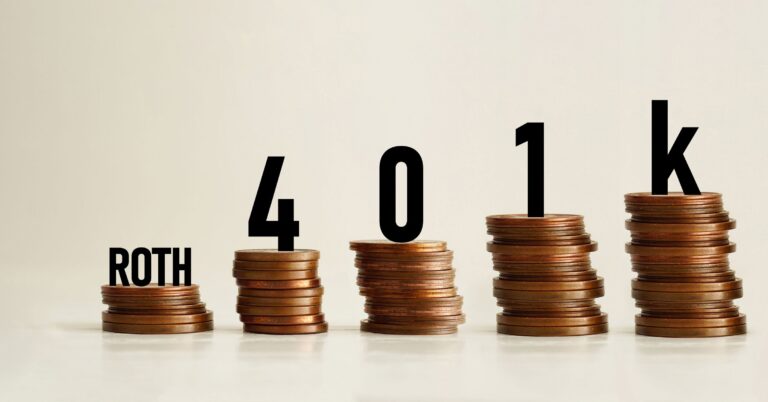
What strategies can retirees employ to extract the utmost benefit from this $6,000 additional deduction? One compelling approach involves contemplating a Roth conversion, particularly if you’ve previously mulled it over but hesitated to proceed. The present moment could represent an ideal juncture for action.
Roth accounts are renowned for their tax-free growth and tax-exempt withdrawals, setting them apart from conventional IRAs and 401(k) plans. With traditional accounts, taxes on contributions are postponed, only to be settled upon withdrawal during retirement years.
This fundamental distinction drives the appeal of Roth conversions. During the transfer from a tax-deferred vehicle to a Roth, the converted sum is treated as ordinary income, triggering immediate tax liability. Yet, post-conversion, the funds reside in a tax-sheltered environment indefinitely.
Furthermore, Roth holdings sidestep required minimum distributions (RMDs), the IRS-mandated annual withdrawals that commence at age 73—or age 75 for individuals born in 1960 or thereafter. This absence of RMDs circles back to the rationale for pursuing a conversion at this precise time.
The senior-specific deduction effectively reduces your current tax obligation, but solely through 2028. Capitalizing on this temporary buffer presents a strategic window to execute a Roth conversion without undue tax strain.
To illustrate, envision a married couple, both aged 65, with a modified adjusted gross income (MAGI) of $100,000. This positions them $50,000 below the phase-out threshold for the senior deduction. With each spouse claiming an extra $6,000, their total supplemental deduction amounts to $12,000.
Should this couple maintain substantial balances in tax-deferred retirement accounts—a scenario familiar to many—they emerge as ideal candidates for conversion. The $12,000 extra deduction could precisely neutralize the tax hit from converting the initial $12,000 into a Roth IRA.
This advantageous alignment persists annually until the senior deduction lapses. Shifting funds into a Roth yields multiple long-term perks: evasion of future RMDs, conversion taxes at potentially lower rates than prospective brackets, and diminished tax exposure for a surviving spouse or heirs inheriting the account.
Beyond Roth conversions, the extra deduction unlocks other fiscal maneuvers.
For those 65 and older who have yet to initiate Social Security benefits, this deduction affords flexibility to further postpone claiming. Delaying elevates monthly payments, enhancing lifetime income security.
Although full retirement age stands at 66 or 67 for contemporary workers, benefits are accessible from age 62, albeit at a diminished rate. Opting to delay instead boosts the benefit by 8% annually up to age 70.
How precisely does the senior tax deduction facilitate this strategy? Rather than commencing Social Security immediately, a retiree might defer it while drawing larger sums from alternative investments to sustain living costs. The additional deduction mitigates taxes on those investment withdrawals.
Concurrently, the unclaimed Social Security benefit accrues an 8% annual increase, amplifying its value upon eventual activation.
The One Big Beautiful Bill ushered in another pivotal shift: taxpayers opting for the standard deduction can now deduct charitable contributions. Prior to this, such reductions were exclusive to itemizers.
Effective for tax year 2026, singles may deduct up to $1,000 in gifts, while joint filers can claim up to $2,000. Unlike the temporary senior bonus, this provision establishes a lasting fixture in the tax landscape.
Seniors aged 65 and beyond stand to accumulate impressive deductions in the interim. For 2026, the baseline standard deduction for joint filers projects at $32,200. Adding the $12,000 senior supplement for both spouses, plus $2,000 in charitable deductions, elevates the total to $46,200.
Navigating these tax dynamics and the One Big Beautiful Bill’s implications demands careful evaluation. Engaging a financial advisor proves invaluable for tailoring strategies to your unique financial profile.
That said, time sensitivity underscores certain provisions. Act promptly to harness these opportunities and minimize your tax burden effectively.