Not Sure Where To Start?
One question. Seven possible paths. Find the right articles for your financial situation in seconds.


To secure superior value in the housing market, prospective homebuyers should steer clear of the overcrowded real estate frenzy zone where competition is fiercest.
This frenzy zone refers to the specific price bracket that attracts the highest volume of competing purchasers. It typically extends from the median home price upward by approximately 50%. Within this range, buyer interest peaks, emotions intensify dramatically, and purchasers frequently end up overpaying due to the heated atmosphere.
By shifting your focus to higher price points, just past this frenzy threshold, the level of demand decreases significantly. With fewer capable buyers in the mix, properties linger longer on the market, providing sellers with reduced competition and buyers with stronger bargaining power. Often, this strategy results in acquiring a superior property at a lower cost per square foot compared to options in the frenzy area.
The existence of this frenzy zone stems from a combination of mathematical realities and inherent human psychology. Purchasing a home ranks among the most emotionally charged decisions individuals face, primarily because residences represent the spaces where we invest the majority of our daily lives. Consequently, personal aspirations, sense of self, and long-term visions become profoundly linked to the choice of living environment.
Properties priced close to the median home value appeal to the broadest possible audience of households, particularly those supported by dual incomes. Financial institutions feel secure extending loans to these buyers, family members such as parents are more inclined to assist with initial down payments, and shoppers tend to mentally fixate on these prices as sensible benchmarks.
Homes listed below the median price tend to move off the market extremely quickly, as inexperienced first-time buyers vie aggressively against one another. Similarly, dwellings modestly exceeding the median draw overwhelming interest because aspiring owners stretch their budgets in pursuit of what they envision as their permanent family residence.
Naturally, the primary obstacle to targeting homes above the frenzy zone is securing sufficient funds to make such a purchase feasible. This might necessitate extending one’s financial limits, liquidating investments with higher volatility, or redirecting resources from other planned uses. In some instances, buyers must intensify their career efforts to secure promotions and salary increases prior to entering the bidding process. Others successfully appeal to relatives for loans that enable them to surpass the next price level.
Stricter criteria from lenders exacerbate this phenomenon considerably.
Financial institutions now demand credit scores exceeding 720, significant cash reserves post-purchase, and down payments amounting to at least 20% of the property value. Obtaining jumbo mortgages proves particularly challenging for self-employed individuals or those with fluctuating earnings.
Consequently, once listing prices surpass the financing capacity of typical households, the competitive landscape thins out abruptly. This creates prime opportunities for savvy, prepared buyers to capitalize effectively.
The absolute last scenario any prudent buyer should pursue involves plunging into a fierce bidding war that culminates in post-purchase regret after outbidding numerous rivals unwilling to match your final offer.
Back in 2004, I sought to transition from a modest two-bedroom condominium to a more spacious three-bedroom, two-bathroom unit in the competitive San Francisco market. Having acquired my initial property in 2003 for $580,000, I soon lamented not opting for something bigger as market values climbed steadily over the following year.
The reality I encountered proved disheartening and relentless.
Every available three-bedroom condo within the $900,000 to $1,400,000 spectrum triggered absolute chaos among buyers. Listings consistently closed 10% to 20% above asking price following grueling multi-offer showdowns. After repeated defeats, I conceded defeat. The emotional toll was profoundly draining.
During a dreary, rain-soaked weekend, I unexpectedly came across a single-family residence priced at $1,550,000, positioned slightly above the prevailing frenzy range.
Located mere steps from a bustling thoroughfare, this home featured three bedrooms, two bathrooms, a separate in-law suite, a private backyard, and an expansive deck. Crucially, it had remained unsold for over a month amid the slower winter holiday period.
Rival interest was virtually nonexistent.
Rather than committing $1.4 million to a $1,300,000 condominium that equated to $1,100 per square foot, I secured the house for $1,525,000, achieving an approximate rate of $720 per square foot.
Advancing along the pricing spectrum yielded a substantial 35% reduction in cost per square foot.
The property suffered from subpar marketing by an agent based out of town, relying solely on a thin, single-page handout. It lacked professional staging or thorough cleaning, and the sellers requested a post-sale rental period.
In 2004, prevailing mortgage rates hovered around 6%, average household earnings lagged behind current levels, and $1.5 million represented a formidable mental hurdle for most. Even assistance from family lenders had practical boundaries.
Such dynamics illustrate how perceived price barriers emerge artificially in the market.
At that juncture, owning a single-family home in San Francisco seemed unattainable given my youth and earnings. Nevertheless, this emerged as the most affordable house within my reach, situated in an optimal neighborhood just beyond the frenzy. Embracing calculated risk, I entered into agreement prior to receiving my end-of-2004 performance bonus in early 2005.
With a 20% down payment of $315,000, my liquid assets would have dwindled perilously low. The sensation of substantial property equity juxtaposed against minimal cash reserves felt profoundly unsettling. However, at age 28, I deemed myself resilient enough to weather potential setbacks. Should disaster strike—as it nearly did amid the global financial crisis—I trusted my ability to rebuild through diligence.
Fortunately, I navigated the widespread job cuts and eventually divested the property in 2017 at a gain, following an initial unsuccessful listing attempt in 2012, coinciding with my exit from the finance sector.
In 2019, anticipating the arrival of our second child, my family resolved to upgrade to a more expansive residence. Serendipitously, a neighboring property two doors away entered pre-sale preparations. This home boasted an additional floor and about 700 extra square feet, totaling roughly 2,540 square feet across all levels. Each story offered sweeping ocean vistas, though like our prior dwelling, it required renovation work.
Considering its dimensions and prime positioning, the selling agent intended an initial listing of $1.98 million, aiming to ignite bidder enthusiasm and escalate the price toward $2.1 million or beyond. I calculated that constructing an equivalent additional level with matching views would demand no less than $750,000, potentially far more. Viewed through the lens of replacement costs, the opportunity appeared exceptionally compelling. Moreover, the structure held around 350 square feet of feasible expansion potential.
Opting against the frenzy of auctions, I prioritized relationship-building. I engaged the listing agent and the two adult daughters who had inherited the estate. To each, I penned personalized notes articulating our expanding family needs, our commitment to thoughtfully renovating and cherishing the home long-term. We positioned ourselves not as speculators, but as committed local stewards eager to enhance the property’s legacy.
This approach proved successful. We acquired the home under the projected list price, circumventing all rival bids. Our all-cash offer further sweetened the deal. Honoring our promises, we updated the interiors, relocated, and continue to reside there presently.
Confirmation of our advantageous deal arrived a year later when municipal authorities pursued additional revenue.
The property assessor’s department contested our transaction amount, requesting photographic evidence of the pre-sale state and even seeking direct input from the listing agent. Ultimately, officials revalued the asset at approximately 15% above our purchase figure to boost tax collections.
That dispute warrants its own detailed account. It unfolded as an exhaustive, frustrating saga.
In contemporary San Francisco, the profile of a standard homebuying household features annual incomes ranging from $400,000 to $800,000. These predominantly dual-income setups often involve professionals from the technology sector. Concurrently, parental financial aid—commonly termed the Bank of Mom and Dad—has expanded to unprecedented scale in facilitating adult offspring’s home acquisitions.
This trend arises from parents’ remarkable wealth accumulation over the preceding two decades via equities, property investments, and diverse assets. Consequently, they possess both the motivation and means to close the divide between offspring earnings and inflated current housing costs. For those maintaining strong familial bonds, overall housing accessibility has arguably reached peak levels.
This parental involvement has propelled the frenzy zone higher—from a 2005 ceiling near $1.5 million to approximately $3 million at present. For three- or four-bedroom, two- or three-bath detached homes on San Francisco’s west side, the $2 million to $3 million segment swarms with eager participants.
These contenders arrive thoroughly preapproved, armed with $400,000 to $600,000 down payments, plus additional reserves exceeding $100,000. Yet the pivotal element remains familial backing.
Beyond $3 million, buyer numbers plummet as prerequisites escalate to $800,000 or greater in ready capital, sidelining many affluent households. Even top wage earners with supportive parents often balk at funneling such concentrations into one asset well above median valuations.
This reluctance marks the onset of true market openings—for those financially equipped to seize them.
Imagine serving as a real estate professional scouting a three-bedroom or larger single-family home for clients. Your hypothetical clients: a couple in their late 30s with a toddler, combined earnings of $600,000 annually, $500,000 saved for down payment, and plans for another child.
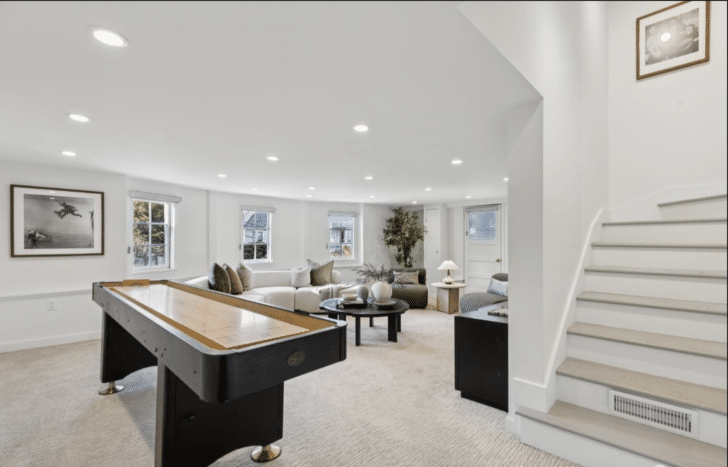
Consider this appealing three-bedroom, two-and-a-half-bath detached home in San Francisco’s Inner Sunset district, launched at $2.495 million. Likely refreshed within the last 15 years, it includes a ground-level game room lacking formal permits. Absent ocean views, it compensates with an nearly double-sized lot of about 4,617 square feet—a standout feature locally. Proximity to amenities yields an excellent walkability score.
This setup suits a young family perfectly, with one bedroom adaptable as a guest space or office. Despite the pandemic’s conclusion, remote work persists one or two days weekly—a boon for parents. Yet the ideal remains four bedrooms.
At $2.495 million, it resided firmly in the frenzy zone. The oversized lot logically warranted a premium over standard 2,500-square-foot parcels, augmented by two-car parking.
Notably, the agent omitted interior square footage details. Official records list it as two bedrooms, two baths, 2,525 square feet. The unpermitted yet inviting lower-level game room, however, boosted practical usable area toward 3,000 square feet.
Totally useable lower-level gaming / play room that is unwarranted
As the clients’ advocate, I would counsel capping the bid at $3 million, backed by a $900,000 down payment (incorporating $300,000 parental aid), a 30-day escrow, and no financing conditions. The bonus 500 square feet undeniably enhances worth, though unpermitted areas command discounts of 30% to 90% relative to approved spaces, contingent on upkeep.
Typically, I advocate inspection protections. Facing at least five rivals, however, waiving it becomes essential for viability. I have personally navigated such purchases by conducting extensive pre-offer inspections with certified experts, estimating realistic upgrade costs transparently.
A 20% over-ask bid with robust down payment and waived contingencies positions strongly, anticipating counters at minimum.
Incorrect—spectacularly so!
The residence closed at $4.05 million—60% above list price. The rapid timeline—contract within three days of listing, escrow in two weeks—suggests an all-cash deal. Traditional financing timelines preclude such velocity due to rigorous verification processes.
In multi-offer frenzies, rationality evaporates for some. As the dream home vision fades, emotion overrides logic. With ample resources, financial caution yields to aspiration.

This transaction recalibrates comparables for similar three-bedroom, two-and-a-half-bath homes nearby. Buyers risk acquiring at market peak, vulnerable to downturns if reselling soon.
Conversely, prospective IPO windfalls from entities like OpenAI, Anthropic, Databricks, SpaceX, and tech peers could inject fresh capital, elevating prices further. That’s their wager.

Upon my clients’ $1.05 million shortfall dismay, I redirect focus: such a gap signals we weren’t contenders anyway. Preferentially, I steer toward $3–$3.5 million listings, where rivalry wanes and pricing normalizes.
True value resides there.
Navigating purchases near record valuations demands precision.
Evade the frenzy zone—roughly median plus 50%—where dual-income households swarm, eroding value and amplifying risk.
Instead, adopt these approaches:
Prevalent barriers encompass $500,000, $1 million, $1.5 million, $2 million, $2.5 million, $3 million, $3.5 million, $5 million, and higher strata.
Venturing upward along the price ladder often unveils startlingly superior value post-frenzy escape. Wishing you success in your pursuit!