Not Sure Where To Start?
One question. Seven possible paths. Find the right articles for your financial situation in seconds.



Even though I came back from a relaxing 10-day getaway in Honolulu to discover my vehicle’s battery completely drained, requiring two roadside assistance interventions and experiencing two unexpected system failures during drives, I have chosen to retain my current automobile.
In an unexpected turn of events, the heavy rain incident on January 1, 2026, involving my soaked car, proved to be a fortunate development in disguise.
The complete depletion of the battery during my absence seems to have effectively reset the malfunctioning electronic modules that were responsible for the excessive parasitic drain on power. Prior to departing for my vacation, the Low Battery Warning indicator appeared on 13 out of 15 cold engine starts, even after I had installed a brand-new battery and driven the vehicle for a minimum of 45 minutes the previous day. Upon my return, however, the automobile has operated without any hitches whatsoever. There have been no recurring Low Battery Warnings, nor any alarming notifications stating ‘System Will Shut Down in One Minute.’ This flawless performance has now persisted for twenty consecutive days and continues reliably.
Given that the persistent problem appears to have been fully addressed, I intend to continue using my decade-old vehicle for a minimum of one additional year, with aspirations to extend its service for another three and a half years. Currently, it has accumulated just 67,500 miles, and my annual driving habits average only around 6,300 miles per year.
Therefore, despite the recent series of mechanical challenges, the robust upward trend in the stock market that began in 2023, and a previous discussion on strategies for decumulating wealth, I have opted against purchasing a replacement vehicle. I simply cannot bring myself to part with it now, having invested significant time and financial resources into its repairs. Is this merely the sunk cost fallacy at play? Perhaps. Nevertheless, after triumphing in a protracted two-month struggle to restore it, the moment has arrived to reap the rewards of that perseverance.
Outlined below are the primary factors influencing my decision to refrain from expending tens of thousands of dollars merely for the fleeting pleasure of a fresh automobile scent.
Acquiring a brand-new automobile would necessitate familiarizing myself with an entirely novel user interface, including its driving dynamics, the operation of the central touchscreen display, the procedure for activating the air conditioning system, and various other features. Naturally, I would eventually master these elements through practice and patience. However, I must admit that I only discovered in the fifth year of owning my present vehicle that it possesses a dedicated button for automatically opening the rear trunk compartment, as well as a separate control to warm the steering wheel surface. Such conveniences represent true luxury in my eyes.
I find myself increasingly resembling my father in my approach to technological advancements. He steadfastly declines to replace his 1998 Toyota Avalon, and similarly, I have no desire to upgrade from my 2015 Range Rover Sport, which continues to feature impeccably fragrant leather upholstery. Moreover, it is equipped with Bluetooth connectivity, parking sensors for enhanced safety, a rearview backup camera, all-wheel drive capability, 22-inch alloy rims, and virtually every amenity one could desire in a premium SUV.
Committing $60,000 to a Tesla Model Y Performance edition or a whopping $115,000 to a fresh Range Rover Sport would engender perpetual anxiety regarding potential dings, scratches, and the ongoing effort required to maintain its showroom condition. This sensation mirrors the trepidation of donning a pristine pair of white sneakers for the first time, but amplified by a factor of 1,000 in terms of emotional investment.
At present, I park my 10-year-old SUV in any available spot without a moment’s hesitation. Should it sustain a minor dent or collision, I simply accept it with indifference. In stark contrast, if a shiny new vehicle were vandalized with a key in a grocery store parking area, I would be profoundly irritated. My personal well-being and peace of mind far outweigh such material concerns. Over the years, I have endured three instances where a neighbor’s carelessly opened door impacted my car, and they displayed utter apathy toward the damage. I am resolute in avoiding further confrontations over these petty inconveniences.
As parents currently navigating unemployment together, a situation I term dual unemployed parents or DUPS, we already shoulder considerable responsibility to sustain our family’s needs. Introducing the additional burden of new-car ownership anxiety would only compound our existing stresses. In truth, one of the greatest advantages of operating an older, inexpensive vehicle is the substantial improvement it brings to one’s mental health and overall emotional stability. Furthermore, newer automobiles typically incur elevated insurance premiums, which adversely affect our monthly cash flow and financial flexibility.

This chart depicts the rapid depreciation experienced by new cars over time.
Feeling at ease with my aging vehicle is undoubtedly pleasant. Sidestepping the associated stress is even more beneficial. Yet, the paramount reason for my decision not to replace it boils down to this: Procuring a new car at this juncture would undermine a critical long-term financial objective.
At present, my passive income streams fall approximately $20,000 short annually of the threshold required for my envisioned state of complete financial independence. Applying a conservative 4% safe withdrawal rate, this shortfall translates to a need for an additional $500,000 in invested assets to bridge the gap sustainably.
Since acquiring my spacious family home in 2023, I have diligently focused on boosting my earnings, maximizing savings rates, and optimizing investment strategies to offset the $150,000 in annual passive income that evaporated during that period. I have achieved considerable headway, bolstered in large measure by the sustained bull market in equities. Additionally, managing two tenant transitions in 2025 allowed me to adjust rental agreements to prevailing market rates, thereby substantially elevating my real estate revenue streams.
Consequently, allocating $50,000 to $115,000 toward an asset destined for inevitable depreciation strikes me as a needless setback. I vividly recall the profound satisfaction of having all desired living expenses fully funded through passive sources alone. That enviable position endured from 2012, when I transitioned away from traditional employment, right up until 2023. I am intensely motivated to reclaim that financial autonomy.
Should I maintain my disciplined efforts for another one to two years while the markets remain supportive, attaining my target of $380,000 in annual passive income appears well within reach. However, diverting $50,000 to $115,000 of capital at this stage would result in a permanent forfeiture of at least $2,000 to $4,600 in yearly passive income potential.
Such a move would place excessive reliance on stock market performance to compensate, a prospect on which I harbor reservations given current elevated valuations. Overseeing my family’s multifaceted portfolio, spanning 10 distinct investment accounts, already demands the equivalent of a full-time commitment at times. I am eager to expedite this process rather than prolong it unnecessarily, as fatigue is setting in.
Justifying the purchase of a non-essential luxury vehicle becomes exceedingly challenging when aligned against a pivotal financial milestone. This rationale prompted me to allocate $1,750 from ongoing cash flow to repair the existing car rather than pursue a high-risk replacement. Yet, when considering the implications for my children’s futures, indulging in such an expenditure verges on the inconceivable.
At 6 and 8 years old respectively, they possess the most extended investment timelines among family members, thereby unlocking the maximum potential for compound growth over decades. Consequently, each dollar allocated to their portfolios today yields exponentially greater value compared to an equivalent sum invested on my behalf.
To be candid, my children are presently in a position of relative financial vulnerability. Lacking specialized skills, employment opportunities, or income-generating capabilities, they are poised to enter a job market profoundly altered by artificial intelligence advancements. There exists a real possibility of post-college underemployment, potentially leading them to reside with us well into adulthood.
My principal strategy for mitigating these risks involves aggressively channeling investments into artificial intelligence ventures on their behalf.
In August 2025, I established a dedicated $200,000 Fundrise Venture account specifically earmarked for their benefit. My ambition is to augment this allocation twofold, enhancing its prospects of maturing into multimillion-dollar sums by their college graduation dates, serving as a robust safety net. Naturally, I will withhold disclosure of this safeguard to prevent any risk of entitlement or diminished motivation.
Moreover, I anticipate a 10 percent correction in equity markets sometime this year. Should this transpire, I am prepared to deploy substantial capital into their custodial brokerage accounts. The prevailing annual gift tax exclusion stands at $19,000 per individual or $38,000 for married couples filing jointly, and with two children, our deployment capacity is considerable.

Faced with a choice between capitalizing on stock market dips or acquiring a new car, my preference unequivocally favors equities.
Consider the transformative potential if I redirect the funds earmarked for a new vehicle into long-term investments instead:
Scenario 1: Allocating $50,000, equivalent to the cost of a base Tesla Model Y, into my daughter’s account for 13 years at an 8% annualized return yields approximately $136,000. This substantial nest egg upon her college completion would provide a powerful launchpad into independence, far surpassing the temporary allure of chauffeuring her in a new Tesla from age 6 onward. She remains content playfully interacting with the front seats of our current ride.
Scenario 2: Deploying $115,000, matching the price tag of a Range Rover Sport, over 10 years at 8% compounds to roughly $248,000. This sum would empower my son to chase entrepreneurial aspirations unbound by societal pressures toward conventional prestige careers.
These figures represent genuinely transformative capital for young adults embarking on life independently. In comparison, upgrading to a more luxurious vehicle for routine errands like grocery runs, school drop-offs, or trips to Lake Tahoe offers negligible life enhancement for me personally. My sole requirement is a dependable transporter that safely conveys us from origin to destination. As an advocate of stealth wealth principles, piloting an unassuming older model also minimizes unwanted scrutiny from others.
An 8% annual return assumption is conservatively realistic based on historical precedents. Should markets replicate the vigorous rallies observed since 2023, the absolute gains over a decade could prove even more impressive. For context, the Innovation fund delivered an extraordinary 43.5% return throughout 2025 alone. Positive momentum suggests potential for continued outperformance, though past results offer no certainties.
Once these projections crystallized, the conclusion became inescapable: Prioritizing investments in their futures trumps indulging in a superfluous new automobile by a wide margin.
Rather than liquidating Treasury holdings to finance a value-eroding purchase, I am reinvesting maturing Treasuries into traditional venture capital vehicles focused on AI, complemented by open-ended venture funds. Additionally, I stand ready to capitalize on any stock market decline exceeding 3% in magnitude.
I align with the viewpoint that the true peril lies not in an AI sector correction, but in forgoing participation in what may constitute a once-in-a-generation wealth creation paradigm at its nascent stage.
In summary, my inherent personal finance orientation precludes rationalizing extravagance on a new car under current circumstances. Frankly, pursuing such a purchase would evoke a sense of foolishness, given my diminished appreciation for the ephemeral prestige of new vehicles. Above all else, I cherish liberty and safeguarding my children’s prospects.
My objective for the coming year is to navigate with minimal automotive disruptions. Should I limit expenditures to $1,000 through $2,000 annually on repairs, excluding routine maintenance like tires, brakes, and oil services, I will deem it a resounding success. Only upon receiving a substantial windfall might I reconsider a new vehicle acquisition.
For now, persistence in building a more prosperous tomorrow takes precedence. In the interim, a thorough wash and interior vacuuming have revitalized my car’s appeal at no cost. Remarkably, this simple refreshment succeeded admirably. See the accompanying image; it genuinely feels like operating a rejuvenated automobile gratis.
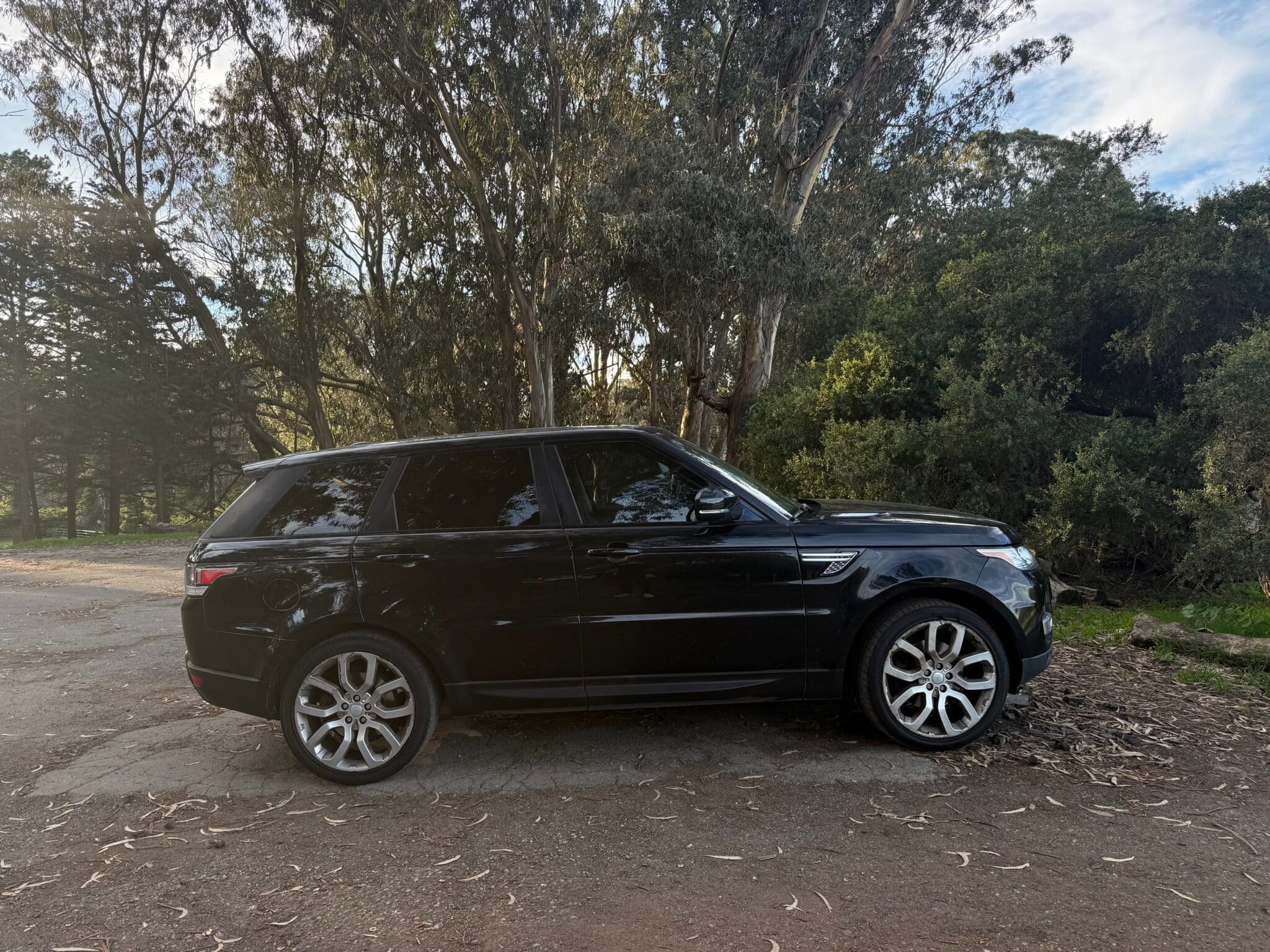
This freshly detailed 2015 Range Rover Sport exudes vitality and reliability even today.
How do individuals reconcile the remorse of disbursing funds on depreciating possessions when aware those resources could multiply manifold for themselves and offspring over time? If strategies exist for prudently accessing principal for significant acquisitions without depleting cash flow reserves exclusively, insights into such approaches would prove invaluable.